Showing posts with label science. Show all posts

Thursday, September 2, 2010

The Calm Before The Storm

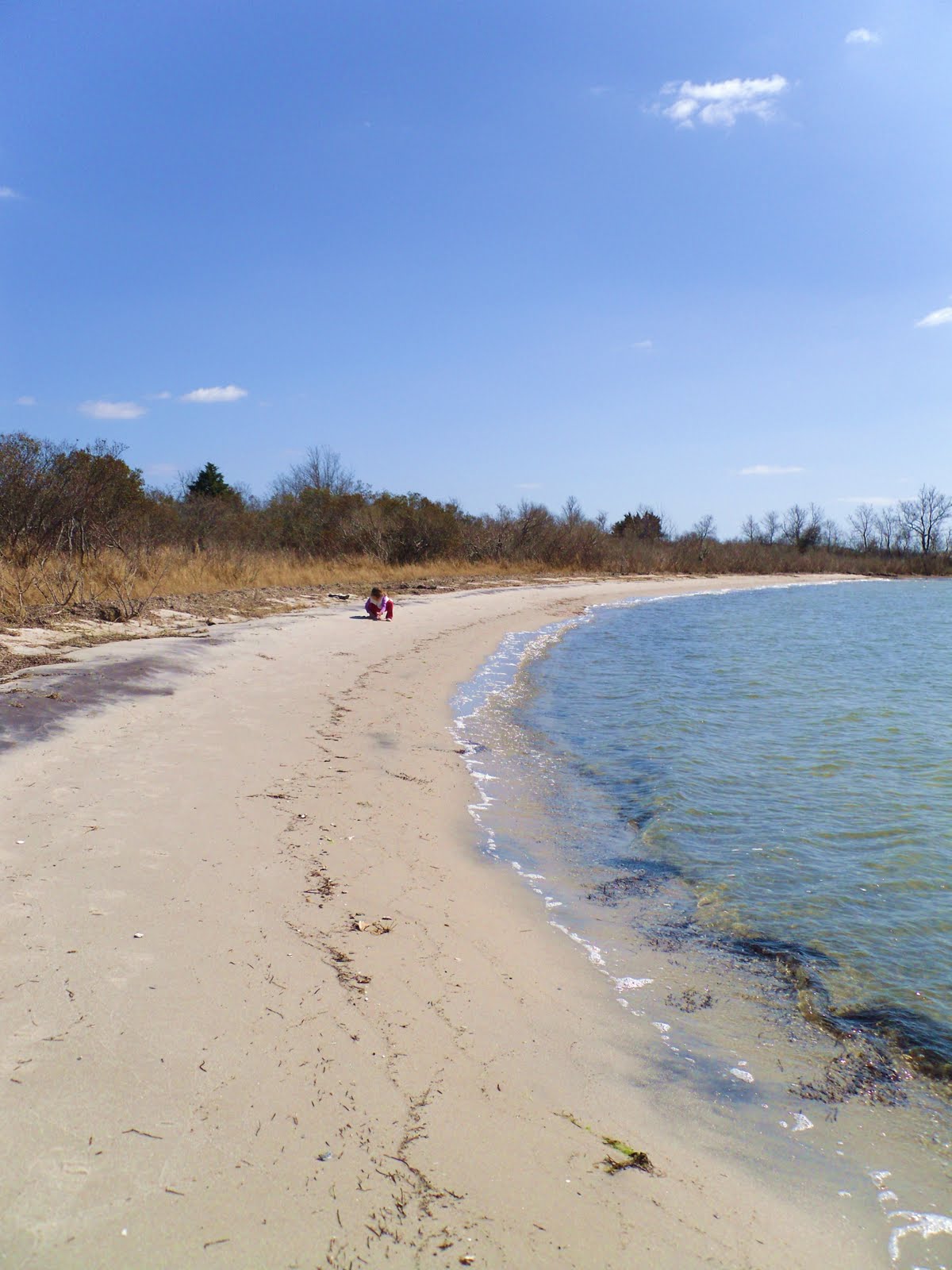
It seems hurricane Earl is headed our way.  Yesterday we decided to venture to the beach and observe the already raging sea.  I am often awe struck by the sheer destructive force of Mother Nature, yesterday was no exception.  The ocean churned and exploded onto the shore with each passing wave.  The children were  mesmerized by it's power.  The duplicity of the ocean is a lesson best learned early in life, we have taught our children to respect it from the beginning. 


I'm using this opportunity to explore the topic of hurricanes with the children. We are reading from the Don't Know Much About Planet Earth and Eyewitness Explorers Weather books.  We also found great information on these websites Weather Wiz Kids  Hurricanes-A Unit Study for Kids .  We will be preparing our hurricane disaster kits tonight and bunkering down for tomorrows storm.  I will keep you all posted how we fare!

Monday, August 23, 2010

Our Butterflies

We awoke Saturday morning to a flutter of wings.  Much to our surprise and delight the butterflies had emerged overnight.  We were not expecting them to hatch for another few days. As a result we had not yet put any food in the house for them.  In order to ensure there survival we opted to release them immediately.  We watched them in rapture for a few moments, awed by their beauty.  We then traveled to the backyard and watch them swiftly escape from the enclosure into the beautiful morning of an August day.  We were only able to catch this one picture before they took off.  We had an amazing time with this butterfly study and plan on doing it every year.  We will be studying up on different types of butterflies over the winter and will plant butterfly attracting plants in the spring...come summer the caterpillar hunt is on!

Friday, August 13, 2010

Pupa Time Excellent.....

Ladies and Gentleman we have pupas!  On Wednesday evening our caterpillars stopped eating and began wandering around the enclosure looking for a place to pupate.  Here is a bit of forewarning to any future caterpillar rearers. Before they wander, they poop A LOT one last time. They empty out their whole digestive tract so this last poop/frass is kind of runny and diarrhea like. Yummy!  Apparently Frass is the official word for caterpillar poop...who knew? Once Black Swallowtails  find a place to pupate, they will stay in that spot for a while without moving very much, sometimes for as long as 24 hrs. Eventually they spin silk thread to attach themselves to the object they decided to pupate on. After another 24 hours or so (depending upon the temperature) they molt one last time. After this molt they are no longer a caterpillar/larva, but a pupa that has formed a chrysalis. Black Swallowtail chrysalises can be any one of three colors. The most common is a dark brown color, that makes it look like part of a stick. This is the kind we have. Less common are a green color and a light brown. Here is an excellent slide show of a Black Swallowtails life cycle...it is so COOL!  After pupating for  9-11 days our adult butterfly should emerge from their chrysalises.
We are so excited! I will post more pics when they emerge.

Monday, August 9, 2010

Constructing Caterpillar Abodes

For months now I have been planning on buying a butterfly growing kit. Today we decided to take things into our own hands and construct one.  Thanks to our gigantic butterfly bush we have a flourishing butterfly population in our backyard .  Not surprisingly we now also have a  flourishing caterpillar population in our vegetable gardens.  My flat leaf Italian parsley and carrot plants are literally overrun with black swallowtail  caterpillars.  We wanted to save both the caterpillars and the plants and decided that building a new home for the caterpillars was our only option.  I was able to search the web and locate the Bug Guide which has a detailed page on rearing caterpillars.  Apparently caterpillars are very particular about what they eat. Individual caterpillar species have a particular type of food plant (or family of plants) that it is associated with.  Moving the caterpillars onto other plants would not suffice.  So we repurposed two old Ikea storage bins into a fantastic caterpillar abode. 
 
Next we needed to construct a pupation site.  Butterfly caterpillars should be given stems and branches from which to suspend their pupae.   I was able to find a suitable rock in the backyard and hot glued fallen tree branches on to it.

Then we harvested some parsley from the garden, wrapped it in a moist paper towel and placed it in the caterpillar house.  The parsley will need to be replenished every 1-2 days.  Finally it was time to introduce the caterpillars to their new home.


Here they are home at last  

Thursday, April 1, 2010

On Island Time

Yesterday was a glorious spring day here in the Mid-Atlantic. We took full advantage of the weather and visited our local barrier island.  This island has three half mile hikes that are perfect for small children.  We were able to do the salt marsh, and maritime forest hikes but were unable to do the dune hike because of recent storm flooding.  These hike are only doable for a few months each year....the flying insects are insaitable once it warms up!  


We also visited the island nature center and took full advantage of the touch tank. We are currently studying invertebrates in science and were able to observe echinoderms, mollusks and crustaceans in the nature centers aquariums.


We capped the day off with a frolic on the beach, where E got sand in his toes for the first time. I am so lucky to live in an area that boasts such an array of natural habitats. My little nature explores are always ready for their next adventure.

Monday, March 29, 2010

Raindrops Keep Falling on My Head

This mornings spring showers brought a welcome excuse to get wet and muddy!  While T was finishing up school O did a hands on weather study:) She merrily laughed as she jumped from puddle to puddle.  The grey skies certainly didn't put a damper on her spirits.

Later, T joined her to perform buoyancy experiments in our newly formed backyard lake. First we collected various yard objects: twigs, pinecones, leaves, barks, and stones. We then hypothesized which would sink and which would float. Objects that float are considered positively buoyant and inversely objects that sink are deemed negatively buoyant. The idea of buoyancy was summed up by Archimedes, a Greek mathematician, in what is known as Archimedes Principle: Any object, wholly or partly immersed in a fluid, is buoyed up by a force equal to the weight of the fluid displaced by the object. From this principle, we can see that whether an object floats or sinks, is based on not only its weight, but also the amount of water it displaces. Next we built craft stick rafts to further explore buoyancy.
We then added various objects to the rafts in order to determine how chaning an objects mass affects it's buoyancy.

I love how homeschooling allows me to turn even the most mundane object (puddles) into learning opportunities. We all had a blast and were amazed by how educational a good rain storm could be!


Tuesday, March 16, 2010

Mammals in Winter


This week challenge was to focus on winter mammals. During the winter many mammals become elusive. We are fortunate to live near a National Wildlife Refuge which provides an excellent locale for our weekly adventures. Today we were able to hike a trail and drive through the preserve on a "mammal hunt".  The children were very excited to discover multiple sets of deer tracks. Our area is heavily populated with white-tailed deer and this particular refuge is also home to an introduced Asian species the sika deer.  Based on the size of our tracks we were able to identified them as white tailed deer.  In addition to these tracks we spotted squirrels, and the scat of wild horses.  We also found these tracks but were unable to identify them due to their degradation.


We plan on continuing our mammals study throughout the spring in hopes of discovering more animals.

Thursday, February 4, 2010

Nature Study: Snow

Outdoor Hour Challenge: Winter Series #4 Winter Weather

This week we studied winter weather; particularly SNOW!  We had an unprecedented snow fall last week which enabled us to do a fantastic snow study.  We were able to perform 3 great experiments.  First we used colored construction paper to determine how the color of an object affects its reflection and absorption of solar energy.   We placed different colored pieces of paper on the snow for three hours and then checked to see which color had left the deepest depression.  Of course the darker colors caused the snow to melt quicker resulting in deeper depressions.  The kids were amazed by the difference between the black and white papers.

 
Next we studied how the volume of water changes based on it's state of matter.  T carefully measured 6 cups of snow and then measured the resulting output of water.  Once melted we had 1 cup of water, he was able to determine that there was a 6:1 ratio between the two. 


Final we filtered the water and studied the resulting particles with a hand lens. 


This is a great reason why you don't eat snow.  The children had a wonderful time learning about winter precipitation.  They should be able to study even more snow later this week; we are due to get a HUGE storm.  I'm so excited!

Thursday, January 21, 2010

Winter Tree Study


This week we are participating in a winter tree study. The children each selected a tree from our yard to study throughout the year. First up is T tree a Kousa dogwood. His tree measured 65 inches high and had a trunk circumference of 3 inches. We found the buds at the tip of each branch. These are the terminal buds. They mark the end of the branches growth for one season and the start of the next season’s growth. We learned that if you move your eye down the branch you can find a thin ring circling it. This is the bud scale scar. This is where last year’s terminal bud grew. The distance between the bud scale scar and the terminal bud is how much this part of the tree grew last year. We also found strange "snail like" objects or eggs on the under side of many branches. We were unable to identify what they were. Does anybody have any idea?


Next up is O's tree a Bloodgood Japanese maple.   Her tree measured 44 inches high and also had a trunk circumference of three inches.  The terminal buds on this tree are double buds. A few dried leaves still clung to her tree.  The children sketched pictures of their trees and did very small bark rubbings. We plan on clipping a small branch from each tree and "forcing" them to bud indoors.  Hopefully this will help to remind us all that spring is just around the corner....I for one and ready for it!


Thursday, January 14, 2010

Cnidaria.....

In the coming weeks T will be learning about the Animal Kingdom.  We have constructed an Animal Kingdom book and will be creating a one page summary for each Phylum.


Today we began studying the Cnidarian Phylum.  The Phylum Cnidaria includes such diverse forms as jellyfish, hydra, sea anemones, and corals.  Cnidarians have two basic body forms, medusa and polyp. Medusae, such as adult jellyfish, are free-swimming or floating. They usually have umbrella-shaped bodies.  Polyps, in contrast, are usually firmly attached. They have tubular bodies; one end is attached to the substrate, and a mouth (usually surrounded by tentacles) is found at the other end.  For our lab this week we studied the life cycle of sea jellies.  Sea Jellies are unique cnidarians because they change body shape throughout their life cycle.  We made models of sea jellies to demonstrate this transformation.


Polyp


Medusa


Friday, November 20, 2009

I'm Sensible

"All our knowledge begins with the senses, proceeds than to the understanding, and ends with reason. There is nothing higher than reason." Immanuel Kant


This week we are studying the nervous system. The nervous system is a network of cells that coordinate the body's actions and carry signals from one part of the body to another. Before any of this can happen though, information has to come into the body. Your five senses gather the information for your nervous system. Our lab this week focused on testing how well the children's senses worked. It was a great excuse to blindfold the children and subject them to hideous smells! We used vinegar and garlic to test their sense of smell...this was funny! Sight was tested with an orange and white vinegar placed in a clear jar. Next we used chocolate chips and apples to test their sense of taste. Bells and coins provide the sounds to test their hearing. Finally we used a Q-tip and a pencil for their sense of touch. The kids had to guess what everything was using only the sense specified. Fun was had by all and there was much giggling and gagging. T wanted to test his senses further and let me lead him around the backyard blindfolded.....obviously he still trusts me.....not sure how long that will last! Next week is genetics...I foresee a birds and bees conversation ensuing...wish me luck;)

Thursday, November 12, 2009

Weekly School Round-Up

I guess since this is partially a homeschool blog I should do at least one homeschool post a week...so here goes.

Math
T continues to excel in math. We have mastered addition and subtraction facts up to twenty and have moved onto basic multiplication. I wasn't surprised to see that T quickly grasped this concept. I found a helpful hint for teaching multiplication..instead of stating 3x4 we say 3 "groups" of four. This works well since multiplication is just a quick way of adding the same number "multiple" times. This verbiage should make the jump to division much simpler. T will be able to visualize the groups within each number.

History
This week we have been covering ancient Asian history, specifically civilizations from China and the Indus river valley. T constructed a typical Indus valley home, complete with it's own well and Lego mini-figure. He was intrigued by this civilization since it seems to have mysteriously disappeared. His bedroom is beginning to look like an archaeological dig site with all of this ancient architecture strewn about. Science
We are still studying the systems of the human body. We covered the respiratory and digestive systems this week. Our respiratory lab involved breathing for a "Giant". T had to inhale through the nose, travel down the esophagus into the lungs and oxygenate red blood cells. Next he moved the RBC to the heart where it was pumped to the giant's foot and exchanged for carbon dioxide. The RBC was then pumped back to the heart and the carbon dioxide was exhaled by the lungs and out the esophagus exiting through the giant's nose. The children really enjoyed this and my three year old was able to tell her daddy at dinner that red blood cells carry oxygen:) As a result of his digestive system lab T learned that his digestive system is 21 feet long and it takes three days for his food to travel through it. You can only imagine the fun my 6 year old son had discussing his food "waste" and how it exits the body.....um how many times can you say poop in one school day?
All of our curriculum choice this year seem to be a hit. We have finally hit our groove...just in time thrown off kilter by the excitement and bustle of the holidays.